Outcome
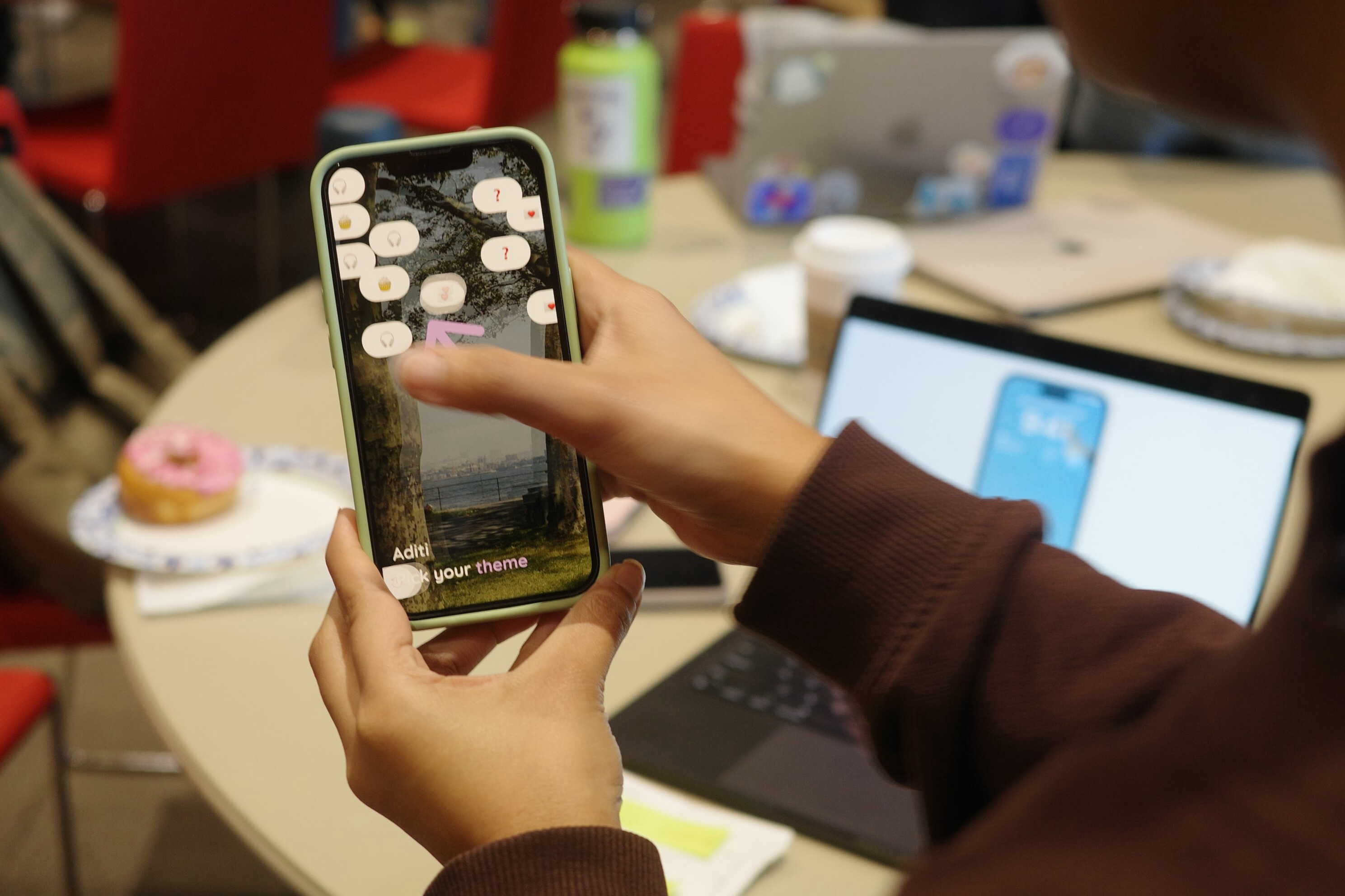
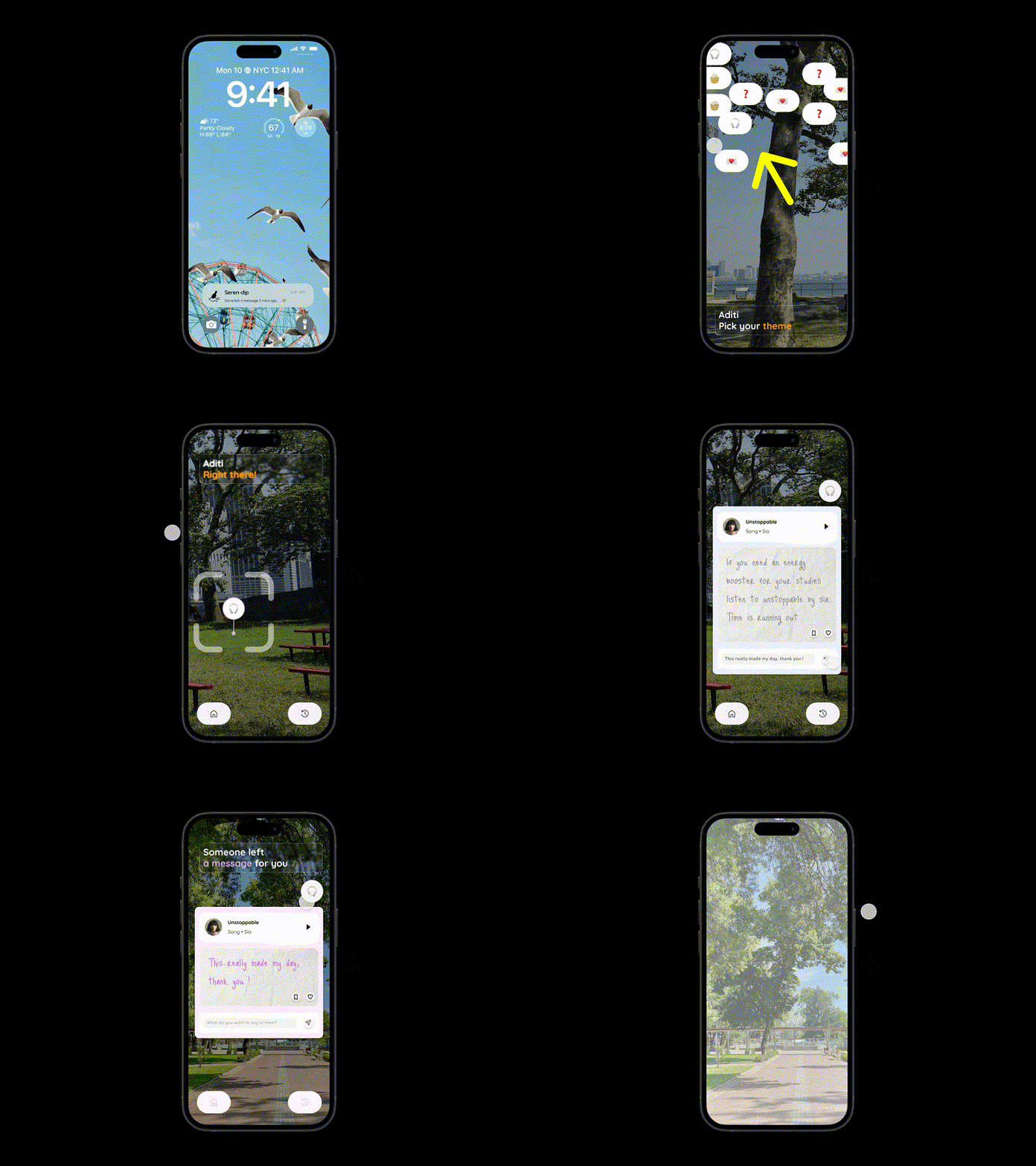
The final build demonstrates the complete Aware-Explore-Interact loop, proving that the “Leave One, Take One” mechanic could function digitally without losing the intimacy of the original paper test. The prototype validates that spatial computing could facilitate connection with the same ease as a physical note.
Premise
We often pass through meaningful places—a park where something important happened, a corner café that changed our life, a street where we met someone special. But these memories fade, and we rarely connect with the stories others have left in these spaces. Serendipidity bridges that gap by making the invisible visible: every location becomes a canvas for human connection.
The Loneliness Paradox: Hyper-Connected, Yet Isolated
Social media fosters constant interaction, but shallow engagement.
- + Digital interactions lack emotional depth.
- + True serendipity is lost in algorithmic feeds.
- + Connection fatigue leads to disengagement.

Why are existing social networks failing to create meaningful, spontaneous connections?
Social media fosters constant interaction, but shallow engagement.
Users are bombarded with endless updates, leading to fatigue rather than depth.
Interactions are driven by algorithms, not organic discovery.
Meaningful posts vanish in feeds, making lasting connections difficult.
Digital interactions exist in isolation, detached from real-world spaces where memories are truly formed.
Rapid Prototyping
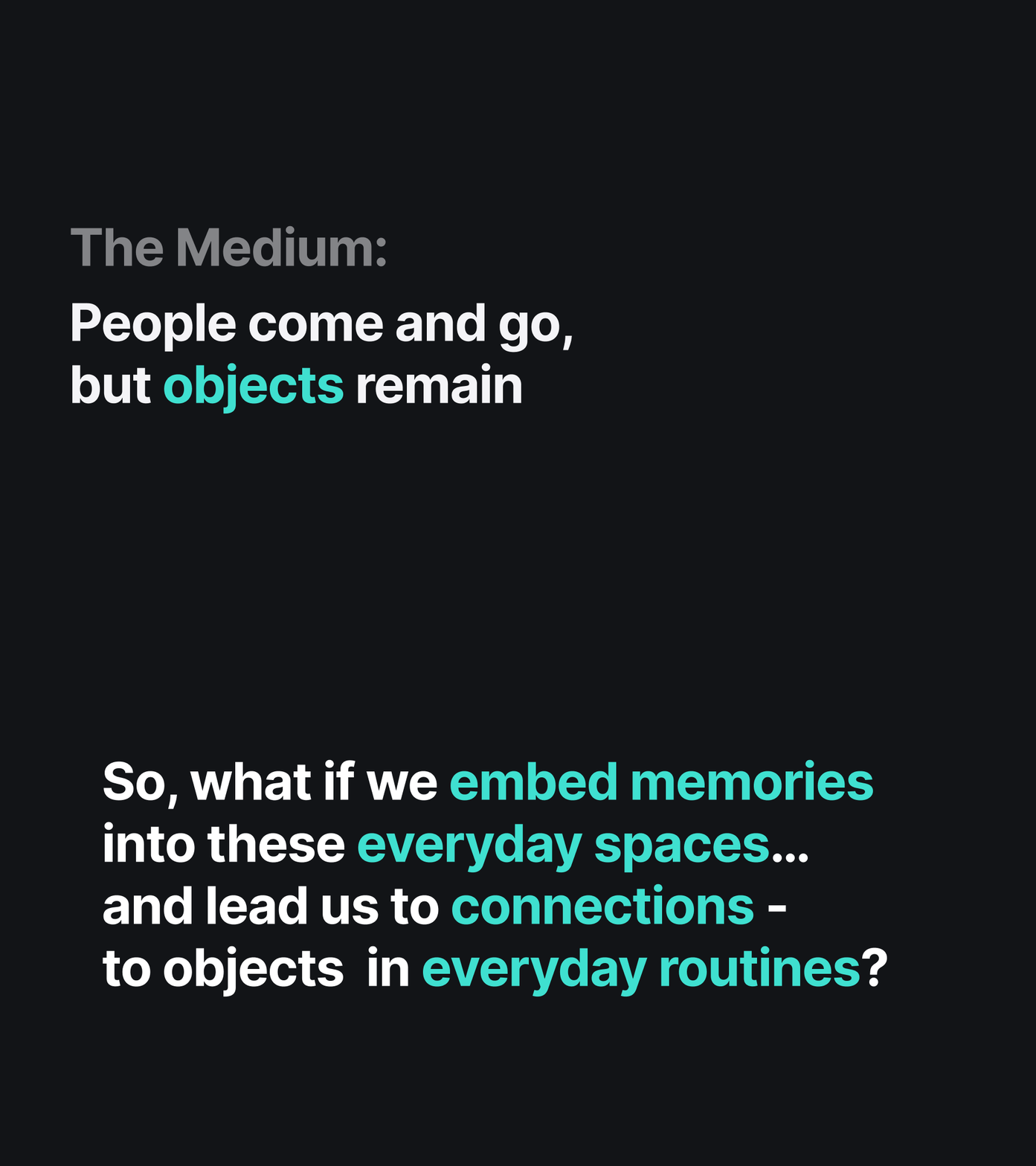
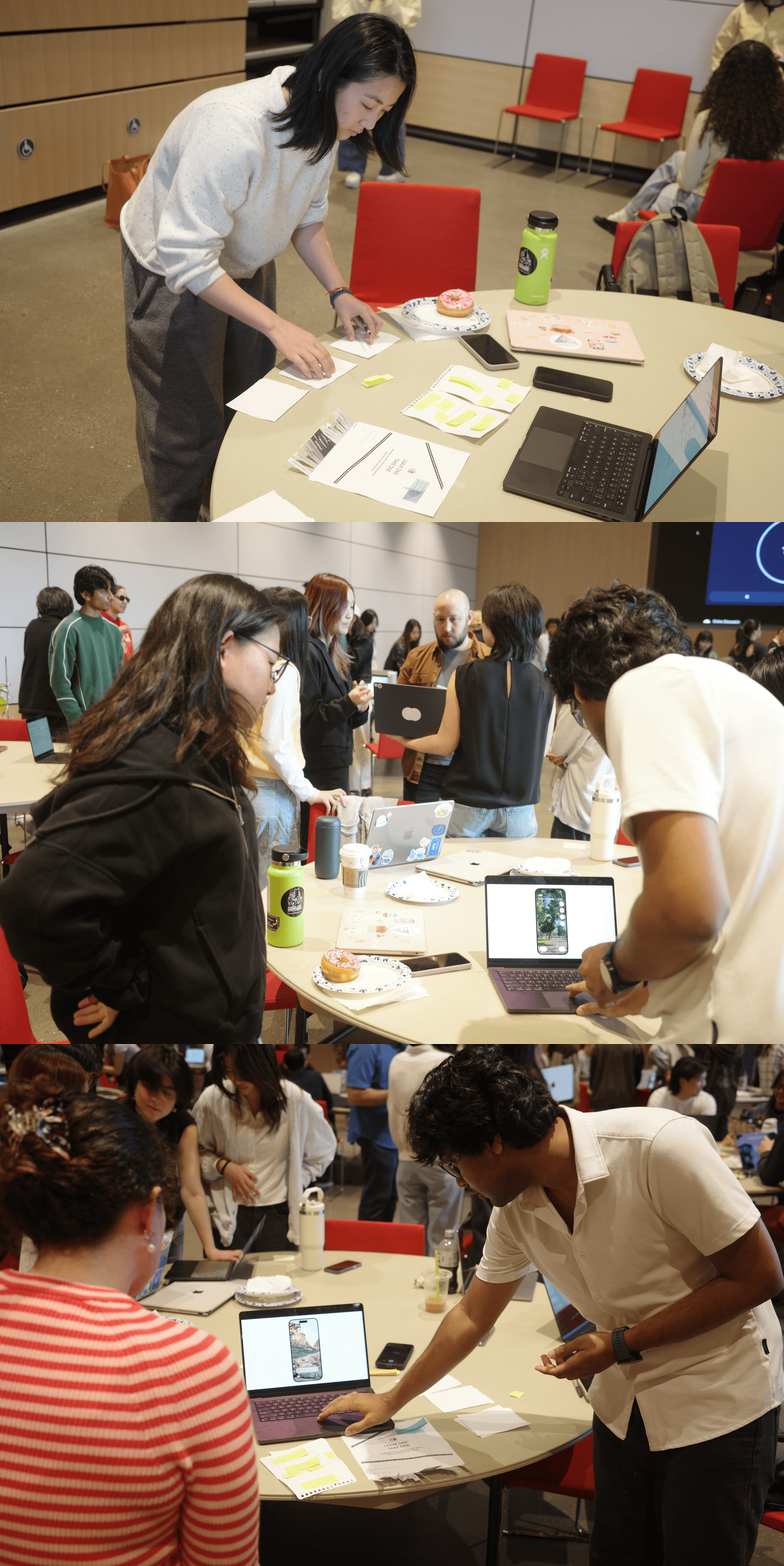
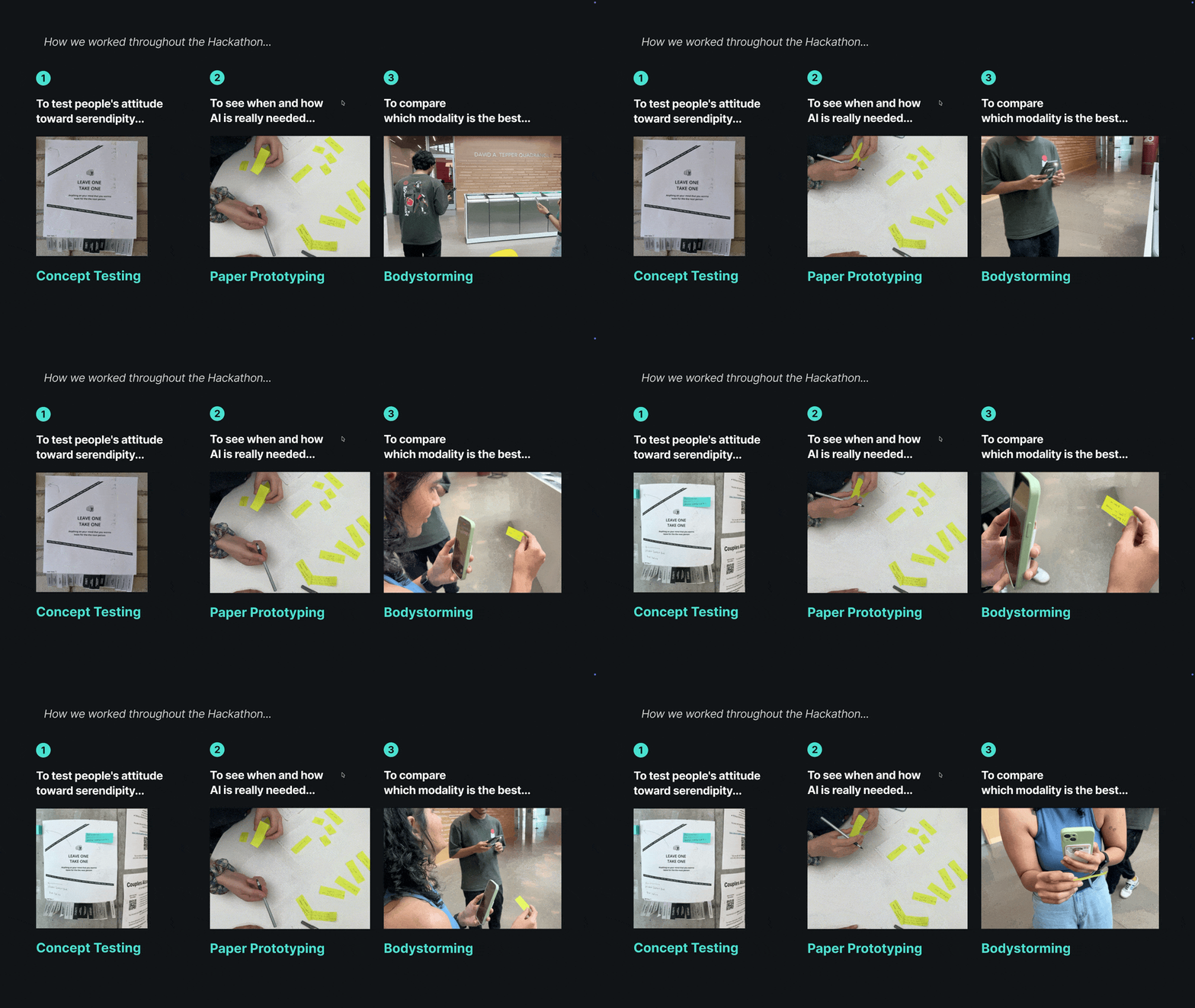
To move quickly from hypothesis to validation, we bypassed high-fidelity tools in favor of physical prototyping. This allowed us to stress-test the “human” side of the interaction—specifically how people react to spontaneous connection—in a real-world context.
Defining the Medium
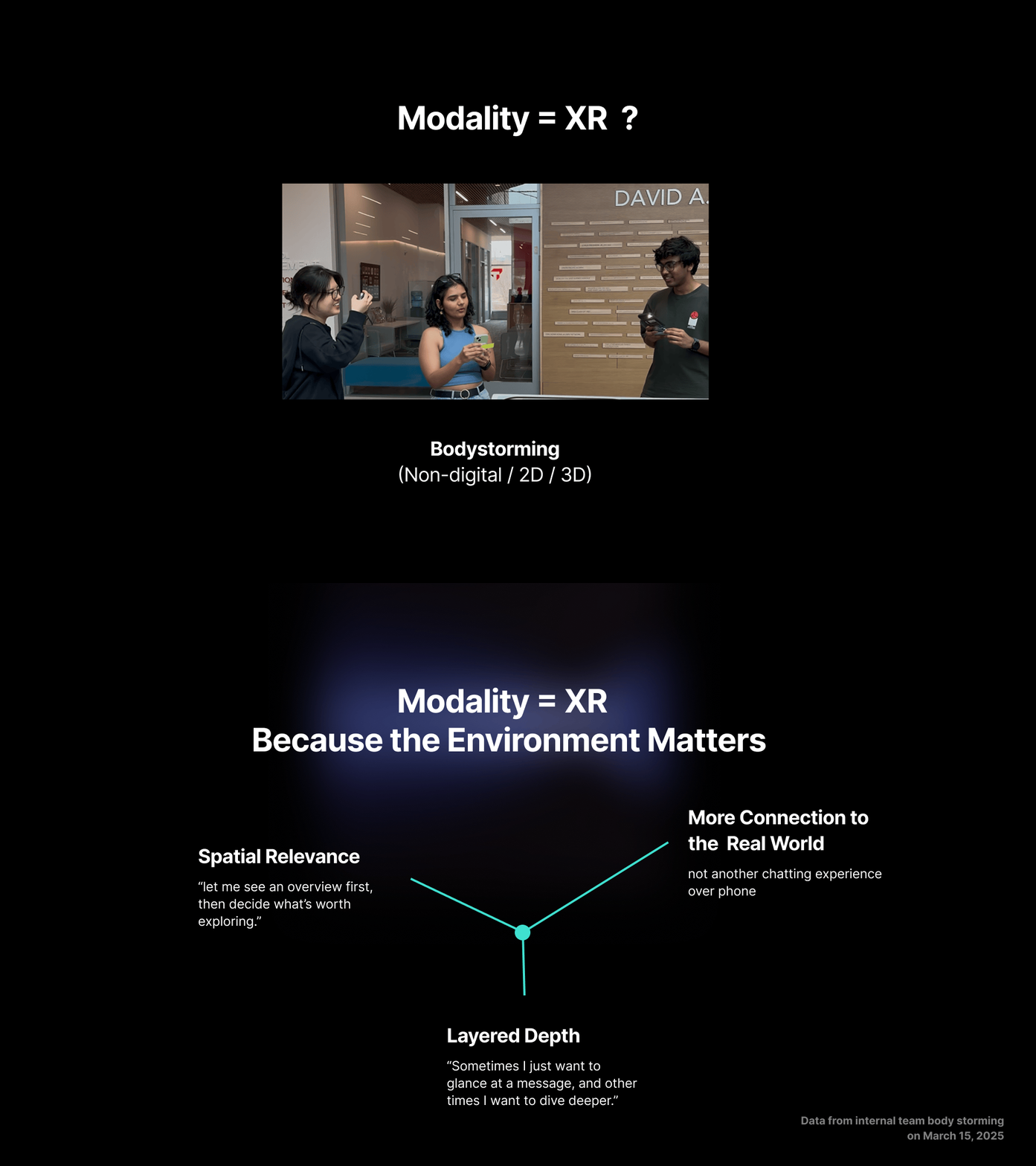
We treated the hackathon as a series of behavioral validations. By moving from analog social experiments to spatial bodystorming, we ensured that the technology served a proven human desire for connection, rather than just being a solution looking for a problem.
Product Strategy
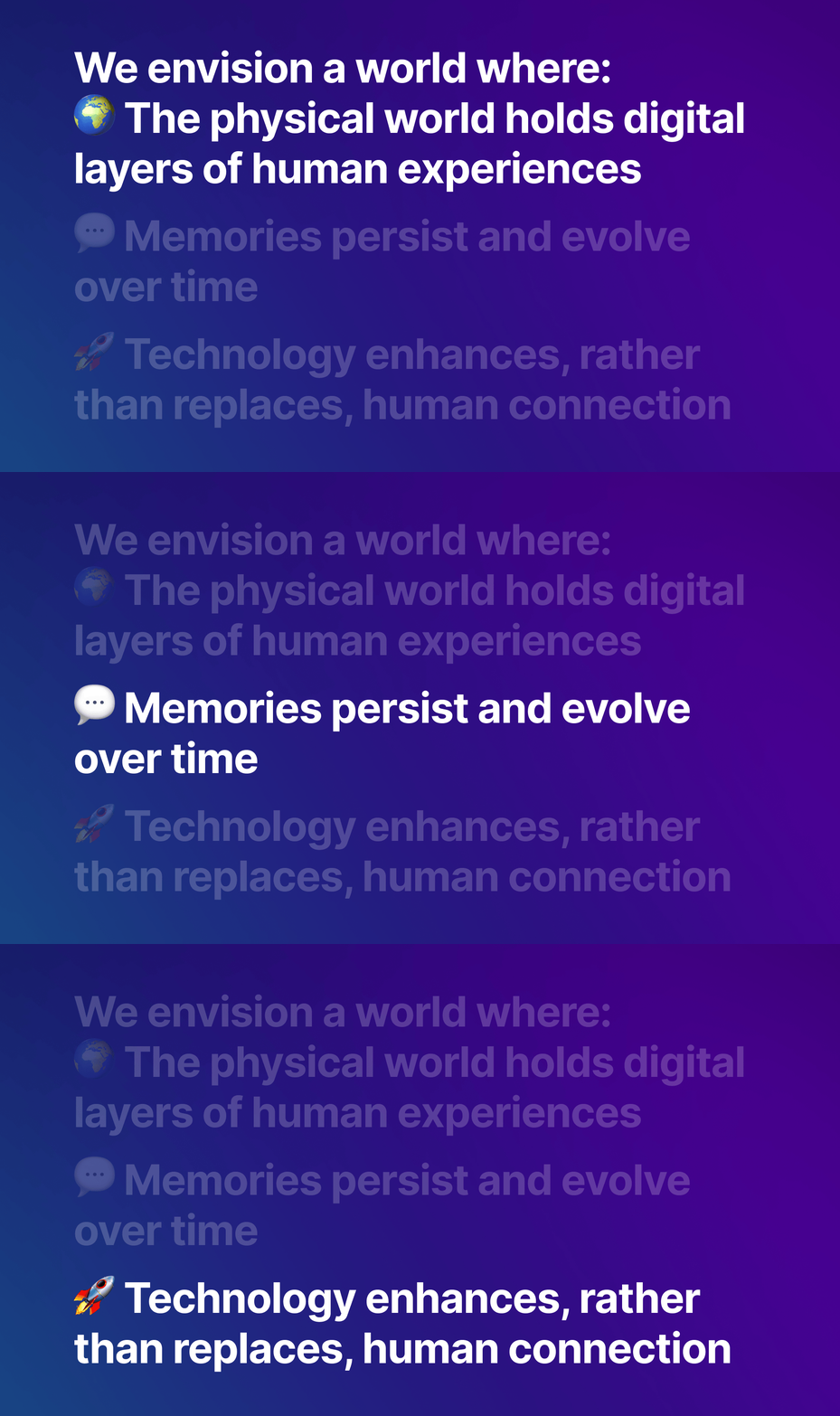
We designed for the curious wanderer—people who love discovering hidden gems, who appreciate the stories embedded in places, and who want to leave traces of themselves behind. The vision is a world where locations are enriched with human stories, turning every street corner into a potential conversation with a stranger across time.
We identified three distinct user archetypes:
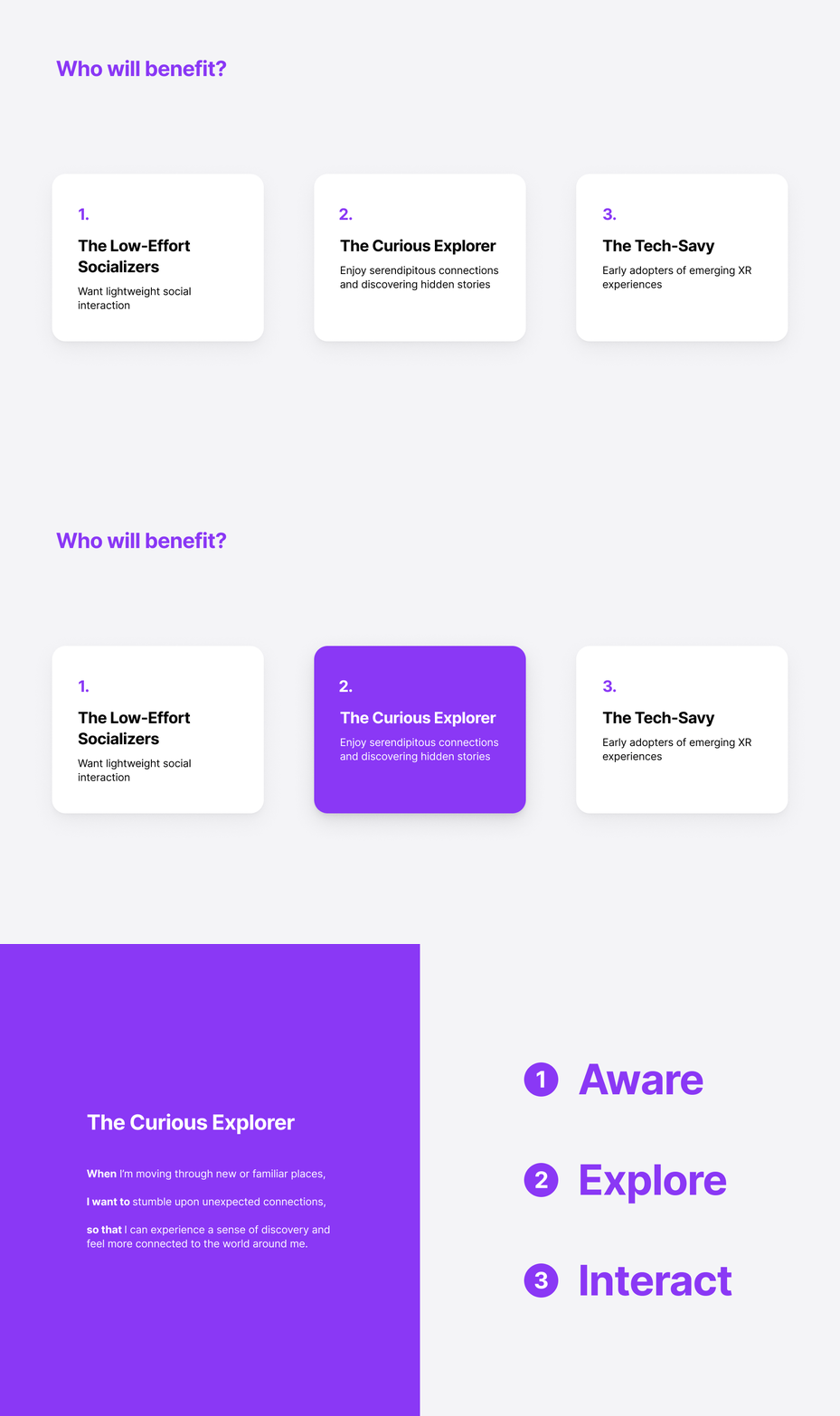
For this sprint, we prioritized the Curious Explorer. Focusing on this specific behavior allowed us to map the interaction journey into three clear stages—Aware, Explore, and Interact—ensuring the system supports organic discovery rather than a passive consumption.
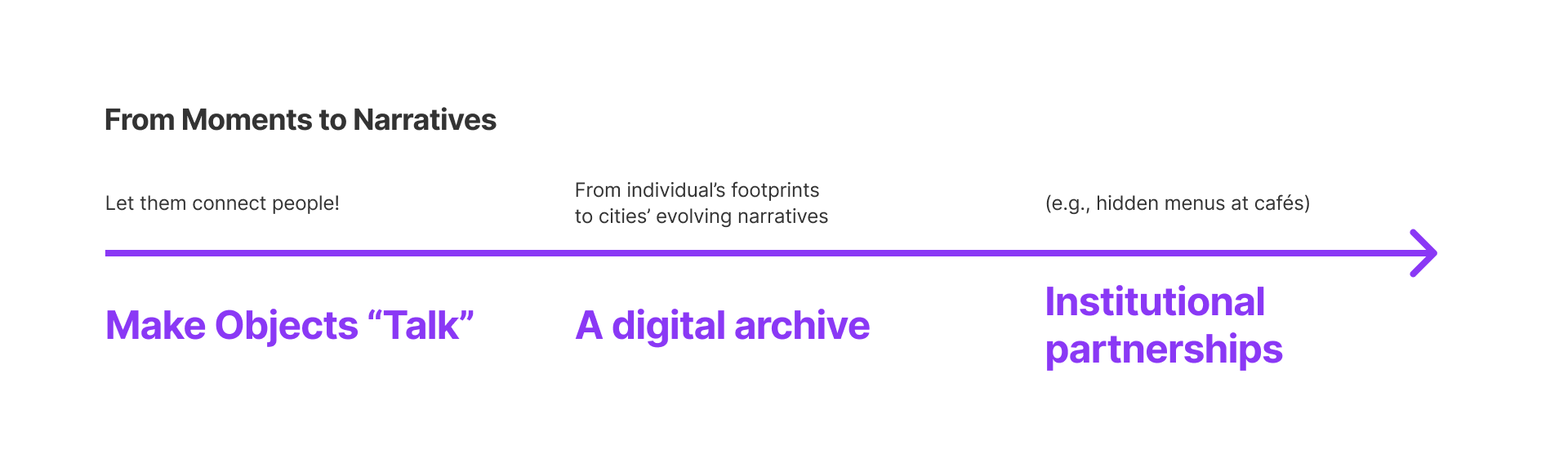
The strategy begins with Making Objects “Talk” to validate peer-to-peer engagement. Once a critical mass of content exists, the platform evolves into A Digital Archive of local history, finally unlocking Institutional Partnerships such as hidden café menus to ground the digital layer in the local economy.
Interaction Framework
Considerations
Privacy & Safety
Users control visibility (public, private, or secret).
Spam Prevention
AI moderation, upvoting, and aging out of content.
Key Drivers
Layered memories that grow over time.
Turning real-world places into meaningful connections.
Everyday items as vessels for shared stories.
Serendipitous encounters that bring people together.